
GTA Flood Services
Water extraction for Oshawa and the GTA, sized to the actual volume, not a flat call-out fee
An inch of standing water in a small utility room and a flooded finished basement are not the same extraction job. We scope by volume and area, not a blanket extraction rate.
Email Us for a Free Estimate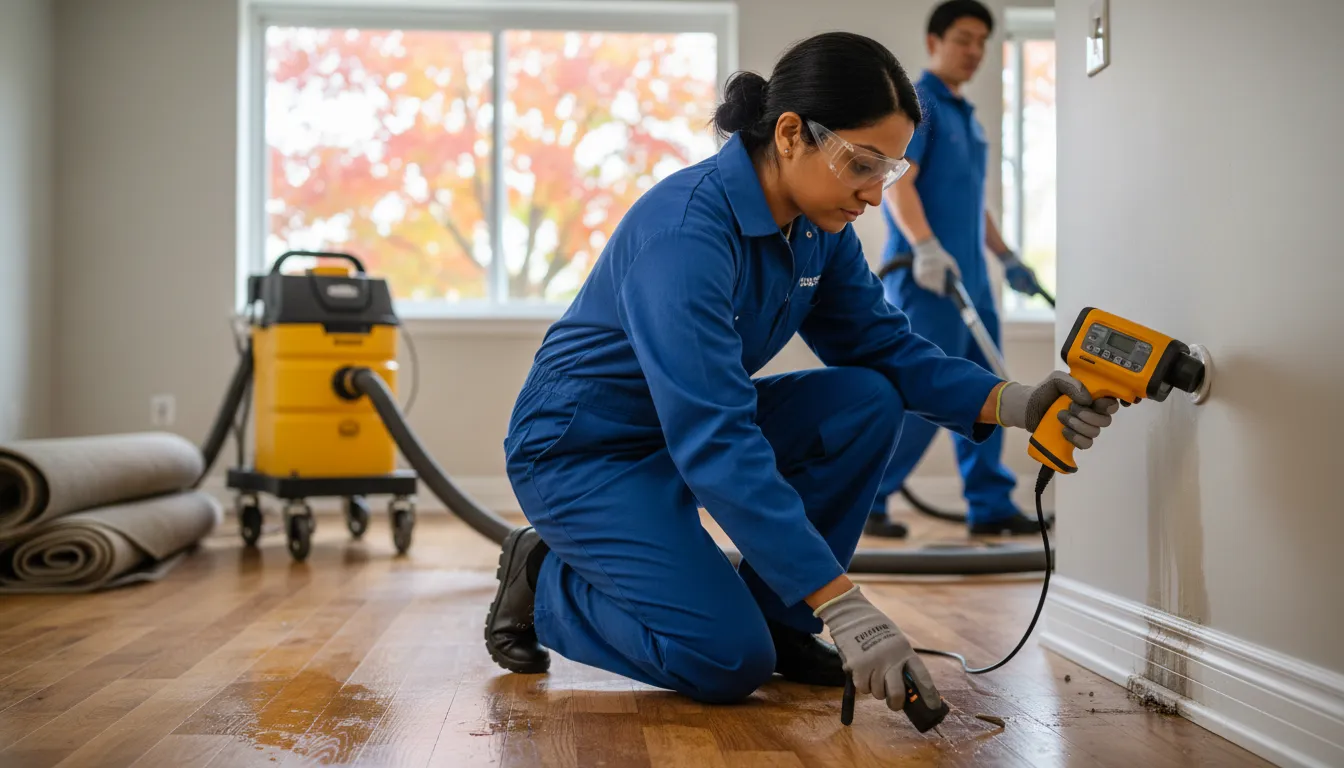
Why extraction pricing shouldn't be a flat call-out fee
Some quotes charge the same flat extraction fee whether it's a small utility room puddle or a fully flooded basement. That pricing model works fine for the company; it doesn't reflect what your job actually needs.
Equipment matters more than most homeowners realize
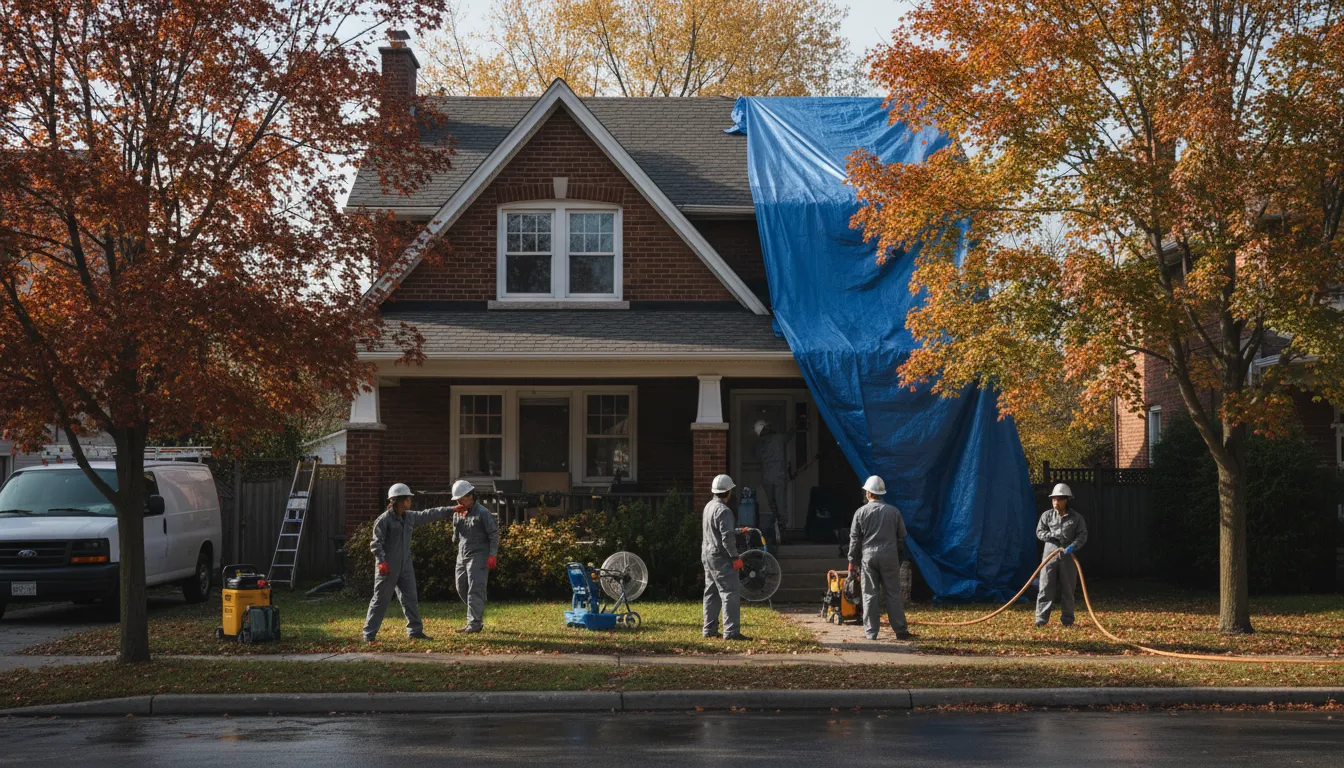
A portable extractor handles a small area fine, but a flooded basement usually needs truck-mount equipment to move volume efficiently. Quotes that don't specify equipment type are often guessing at what they'll actually bring.
Carpet and pad extraction is a different task than hard-surface extraction
Water trapped in carpet padding needs specific extraction technique versus water sitting on a concrete or tile floor. We scope these separately since the labour time differs.
GTA basements often have sump pump systems already in play
If your home has a sump pump that's already been working, that changes how much residual water we're actually extracting versus what the pump handled. We assess this rather than quoting blind.
Older foundations can mean water finds its way into wall cavities, not just the floor
In older Durham and Toronto basements without modern vapour barriers, extraction sometimes needs to address water that's migrated into lower wall cavities, not just standing floor water.
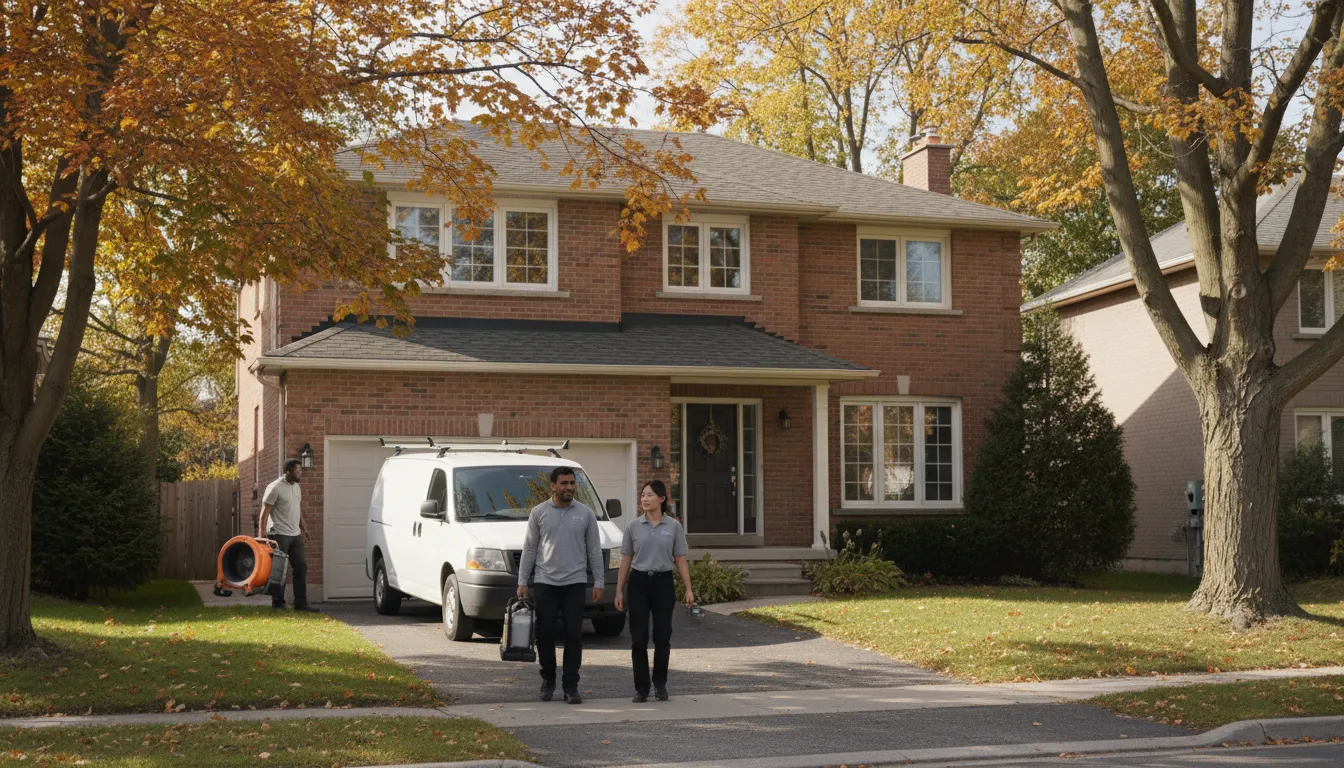
A flat extraction fee doesn't tell you what equipment or effort is actually involved
When every extraction job costs the same regardless of water volume or affected material, you have no way to know whether you're being fairly priced for a big job or overpaying for a small one. It also gives no incentive to bring the right equipment for genuinely large volumes.
We scope extraction by volume, material, and equipment needed
Our quotes specify the affected area, the type of surface or material involved, and the equipment we're bringing to handle it. If your situation is smaller than a typical call, the price reflects that; if it needs truck-mount equipment for a larger volume, we explain why.
Our water extraction process
Matched to the actual volume and material involved.
- 1
Assess volume and affected materials
We determine how much water is present and what surfaces or materials it's affecting before choosing equipment.
- 2
Bring the right equipment for the job
Portable extractors for smaller areas, truck-mount equipment for larger volumes.
- 3
Extract carpet, pad, and hard surfaces separately
Different materials need different extraction technique and time.
- 4
Check for water migration into wall cavities
Especially relevant in older GTA homes without modern vapour barriers.
- 5
Confirm with follow-up moisture checks
We verify extraction actually removed the water rather than just clearing visible standing water.
Why our extraction scope matches the actual job
Extraction is the first visible step. It's also the easiest one to under-deliver on if it's priced as an afterthought.
We price by volume, not a flat call-out
Small jobs cost less, large jobs get the equipment they need.
We match equipment to material type
Carpet, pad, and hard surfaces each get appropriate extraction technique.
We check wall cavities in older homes
Especially relevant across older Durham and Toronto housing stock.
We account for existing sump pump activity
So you're not billed for water your own system already handled.
We confirm extraction with follow-up checks
Moisture readings verify the water actually came out.
We're insured for equipment-based extraction work
Coverage matched to both portable and truck-mount extraction jobs.
Water extraction questions
How is water extraction priced if not a flat fee?
By affected area, material type (carpet versus hard surface), and equipment needed. A small utility room extraction costs less than a fully flooded finished basement, and the quote reflects that.
Do you bring truck-mount equipment?
For larger volumes, yes. Smaller areas may only need portable extraction equipment. We determine this on assessment rather than assuming one approach fits every job.
Can water get trapped in walls even after the floor looks dry?
In older homes, particularly across Durham and Toronto without modern vapour barriers, yes. We check for this specifically rather than considering the job done once the floor is clear.
My sump pump already ran during the flood. Do I still need extraction?
Possibly, if there's residual standing water or moisture the pump didn't fully clear. We assess what's left rather than quoting a full extraction regardless of what your pump already handled.
Is extraction the same as drying?
No. Extraction removes bulk standing water; drying addresses the moisture that's absorbed into materials afterward. We scope these as separate steps since they require different equipment and time.
Get an extraction quote sized to your actual water volume
Email us the situation and we'll tell you honestly what equipment and time it actually needs.
Email Us for a Free EstimateWeather drives water-damage risk — email us if you find water.
Fall water-damage conditions in Oshawa, ON
Fall rain around Oshawa, ON tests gutters, sump pumps, and foundations; catching leaks and seepage early prevents the slow water damage and mold that surface over winter.
Proudly Serving Oshawa, ON
Local, on-time service throughout Oshawa and the surrounding area.